StreetEasy - Apartments in NYC
- 3.2
- Rating
- 1.00M
- Installs
- Free
- Price

 Analysis by App-foxy
Finding a home in New York City is rarely a calm, straightforward task. Listings appear, disappear, change price, and compete for attention in a market where a missed detail can waste an afternoon. I tested StreetEasy - Apartments in NYC with that reality in mind, using it as a practical search tool rather than treating it like a simple scrolling catalog. My overall impression is that it is most useful when you already know roughly where you want to live and are willing to check details carefully.
This free House & Home app comes from StreetEasy, Inc. and focuses specifically on New York City apartments for rent and for sale. That narrow geographic focus is its biggest advantage: instead of mixing cities and neighborhoods, it puts the city’s housing search in one place. The app has been available since September 29, 2014, and its current version is 3.103.0 for devices running Android 8.0 or later. It is rated for Everyone, which makes the basic experience accessible to a broad audience.
How StreetEasy fits into a real NYC apartment search
The first thing I noticed is that this is not an app I would open casually without a plan. Its value grows when I use it to answer a specific question: Which apartments match my area, budget, room count, and preferred type of housing? A focused search is much more productive than browsing every available listing and hoping something feels right.
You May Also Like

 Blood Strike: 2.5 Anniversary
Blood Strike’s Loadouts Turn Every Drop Into a Tactical Gamble
A close look at Blood Strike’s custom loadouts: how fast access to signature weapons reshapes its battle royale rhythm, rewards preparation, and narrows the gap between fights.

 Pandora - Music & Podcasts
Pandora’s Music Is Easy to Start, but Harder to Recover
Pandora’s strength is its low-effort path from a seed to a station. Its weak spot is how much confidence it asks you to place in connection, setup, and quiet recovery.

 8 Ball Pool
 Is Built on Rivalries, Rematches, and Routine
A close look at the rivalries, rematches, shared routines, and unanswered safety questions that turn a quick pool match into a persistent mobile community.

 Samsung Music
’s Quiet Strength Is Playing What You Already Own
Its reach comes less from spectacle than from dependable access to a personal library. That simplicity is both the app’s strongest retention engine and its ceiling.

 AccuWeather: Weather Radar
AccuWeather Review: A Quick, Clear Forecast for Everyday Decisions
For everyday plans, the best forecast is the one you can understand quickly. AccuWeather makes rain timing, radar, and local conditions easy to act on, with a few trade-offs.

 Hill Climb Racing
Why Hill Climb Racing Still Turns Crashes Into One More Run
A tiny car, a bumpy hill and one more upgrade: Hill Climb Racing keeps resurfacing because its simple chaos makes every near-miss feel personal.
More From Our News Desk
View All News


For example, imagine I am moving for work and want to compare a few neighborhoods rather than search the whole city. I can begin with one area, inspect the available homes, and then repeat the process elsewhere. That workflow helps me compare the character of listings instead of judging them only by isolated photos. It also makes it easier to notice whether my expectations are realistic before contacting anyone.
The app is designed for both renters and buyers, so it can support different stages of a move. A renter may use it to monitor apartments while preparing to relocate, while a buyer may use it to understand what is available in a preferred part of the city. I like that this makes the app useful before I am ready to apply or make an offer. It can serve as a research tool, not only a final step.
That said, the app is specifically about New York City. If I am looking for a home in another city, its focused database is not an advantage because it does not match that need. Someone moving between several regions may prefer a broader housing service that keeps different markets together. StreetEasy makes more sense when NYC is the actual destination, not merely one possibility among many.
What the free price means in practice
The app is free to use, which matters because apartment hunting can already involve moving costs, application expenses, transportation, and time away from work. I can install it without paying for access to the basic search experience. That makes it reasonable to keep on my phone even if I am only researching neighborhoods or planning a move several weeks ahead.
Free access does not automatically make every listing a good opportunity, though. The app helps me find and compare homes; it does not remove the financial reality of renting or buying in New York. I still need to examine the full listing, understand the stated terms, and judge whether a home fits my personal budget. I would not treat the absence of an app charge as evidence that the housing itself is affordable.
I also appreciate that I do not have to commit financially just to learn what the market looks like. That is useful for first-time renters who are still learning the difference between neighborhoods, apartment types, and asking prices. The app can help narrow the search before I spend money on visits or professional assistance.
My value judgment is therefore simple: the app offers free access to a specialized NYC housing search, while the larger financial decision remains entirely separate. That distinction is important. It is a useful no-cost starting point, but it is not a substitute for checking income requirements, deposits, closing costs, fees, or other housing expenses directly with the relevant parties.
Reading listings with more care than the headline
A common mistake in apartment apps is to stop at the first attractive photo and the most noticeable price. I found StreetEasy more useful when I treated every listing as a starting point for questions. I look at the location, the type of transaction, the room arrangement, and the wording around the home before deciding whether it deserves further attention.
One practical habit is to separate “interesting” from “ready to contact.” I can save a promising apartment mentally or in my own notes, then compare it with several alternatives. This prevents one polished listing from dominating the search simply because its presentation is appealing. It also gives me a clearer sense of what I am actually getting for the money.
Another useful workflow is to search by neighborhood first and then by apartment characteristics. Starting with a very broad search can produce too many possibilities and make the process feel endless. Starting with a location helps me understand commute patterns, nearby streets, and the general feel of the market before I become attached to a particular home.
I would also record questions while browsing. Is the apartment still available? What expenses are separate? Which details are confirmed and which are only implied by the photos? Does the layout work for my furniture and daily routine? Writing these questions down turns the app from a passive feed into a preparation tool for conversations with agents, owners, or building representatives.
Renting and buying require different reading habits
The combined rental and sales focus is convenient, but it means I need to pay attention to the type of listing I am viewing. A renter and a buyer may look at the same neighborhood for completely different reasons. A renter may care most about flexibility and monthly commitments, while a buyer may be thinking about ownership costs, financing, maintenance, and long-term suitability.
When I browse rentals, I concentrate on whether the apartment fits my immediate life: location, space, daily travel, and the practical effort of moving. When I browse homes for sale, I slow down and treat the listing as an early research step rather than a complete decision-making package. The app can show me what deserves investigation, but it cannot replace professional checks or a careful review of the transaction.
This distinction is one of the app’s less obvious trade-offs. Having both kinds of housing in one service is convenient, yet it can also make the search feel less focused if I am not clear about my goal. I recommend deciding before browsing whether I am renting, buying, or simply learning the market. That small decision keeps the results easier to interpret.
Where the experience saves time
StreetEasy is especially helpful when I need to compare several parts of New York City without opening a separate service for each one. The dedicated focus means I can keep my research centered on one housing market. For a person moving from another city, that concentration can make the first stage of planning less confusing.
I find the app most efficient when I use short sessions. Rather than spending an hour scrolling until every listing blends together, I review a manageable group, remove homes that clearly fail my requirements, and keep notes on the few that deserve a closer look. This method reduces decision fatigue and makes changes in availability easier to handle.
A realistic example would be a renter working full time who has only a weekend to prepare for a move. On the first evening, I would use the app to identify suitable neighborhoods and a realistic range of apartments. The next day, I would compare the strongest candidates and prepare questions. By the time I arrange viewings, I would be evaluating a shortlist instead of wandering through an enormous collection of possibilities.
That is where I see genuine value: not in replacing every part of the search, but in organizing the early research so my limited time is spent on better candidates.
Limitations I would not ignore
No apartment database can make New York’s housing process effortless. Listings can change, availability can move quickly, and a home that looks suitable on a screen may feel very different in person. I would never assume that an attractive result is still available simply because it appears in a search. Checking the current status directly is an essential part of using the app responsibly.
The app also cannot make personal judgment calls for me. A listing may fit a location preference but fail because of the layout, building conditions, commute, or total cost. Photos and written descriptions are useful for filtering, but they are not a complete substitute for seeing the apartment and asking precise questions.
Its city-specific focus can be either a strength or a weakness. For a person committed to New York City, it removes irrelevant results. For someone comparing New York with other markets, it creates an extra step because the wider comparison must happen elsewhere. I would choose a broader alternative if my search covers multiple cities or if I want one account and one workflow for different regions.
The average rating is 3.2 from around 5.1 thousand ratings, with about 1.4 thousand written reviews. I read that as a sign to keep expectations practical rather than assuming the experience will be perfect for everyone. The app has more than 500 thousand installs, so it has clearly attracted a substantial audience, but popularity does not change the need to verify individual listings and make independent decisions.
Who will get the most from it
I think the strongest audience is a renter or buyer who already knows that New York City is the target market. The app is particularly useful for people who want to compare neighborhoods, build a shortlist, and learn what kinds of homes are available before arranging visits. It can also help someone who is relocating from outside the city and needs a focused starting point.
First-time renters may find the free access valuable because they can explore without adding another purchase to an already expensive process. The most effective approach is to use it for education as well as discovery: compare several areas, notice which requirements repeatedly eliminate listings, and adjust expectations before contacting anyone.
Buyers can use it for early market awareness, especially when they are still deciding where to concentrate their search. I would be more cautious about relying on it as the only tool for a major purchase. The app is useful for finding possibilities, but the later stages require deeper due diligence and advice suited to the specific transaction.
Who should choose something else
I would skip StreetEasy if my housing search is mainly outside New York City. Its specialization would not help enough to justify making it the center of that process. A nationwide or multi-city service would be a better fit for someone who wants to compare several markets at once.
I would also avoid treating it as a complete moving solution. It is not the right choice if I expect an app to verify every condition, negotiate on my behalf, or decide whether a home is financially safe. Those expectations belong to a broader process involving direct communication, visits, documents, and professional guidance where appropriate.
Finally, people who dislike checking details may become frustrated. The app can reduce the amount of searching, but it cannot eliminate the work of comparing homes and confirming what matters. Its free price makes trying it easy, yet the time saved depends on how deliberately I use the search.
My recommendation after using it
StreetEasy - Apartments in NYC is worth installing if I am seriously exploring New York City rentals or homes for sale. I like its focused purpose, free access, and usefulness during the early comparison stage. It gives me a practical place to begin, especially when I need to turn a vague idea such as “somewhere in NYC” into a smaller set of neighborhoods and realistic possibilities.
My recommendation comes with a clear condition: use it as a research and shortlisting tool, not as the final authority on a property. Check availability, ask about every important cost, inspect the apartment when possible, and keep separate notes so attractive presentation does not outweigh practical fit.
For me, the best value is the combination of specialization and no app charge. I can explore the city’s housing market without paying for access, then decide which listings deserve more time. That is a meaningful benefit for renters and buyers who are still forming a plan.
If New York City is your destination, I would start here and compare carefully. If your search spans other cities or you want a service that covers every stage of a move, I would pair it with broader tools rather than rely on it alone. In that role, StreetEasy is useful, focused, and easy to try, provided I remember that the app opens the door to the search; it does not make the housing decision for me.
FAQs for StreetEasy - Apartments in NYC
01What features does StreetEasy offer for apartment hunting in NYC?
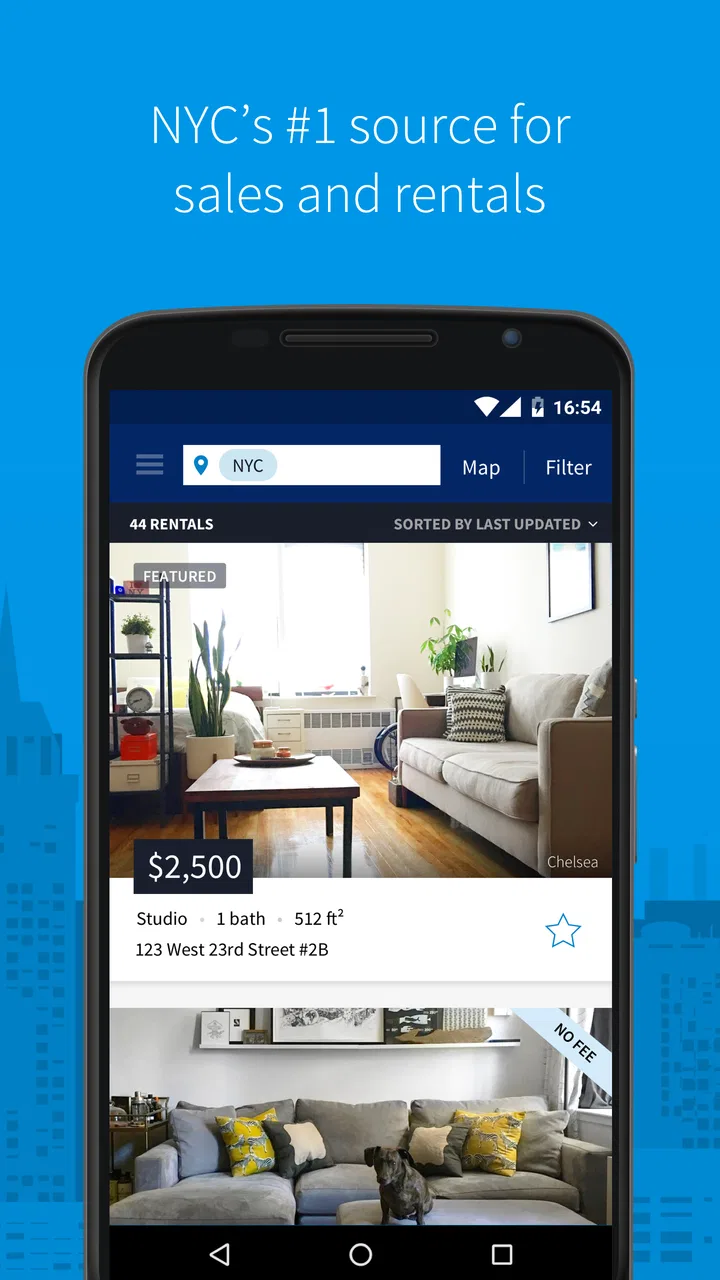
StreetEasy provides a comprehensive platform for finding apartments in NYC, offering features like detailed listings with photos, virtual tours, and neighborhood insights. Users can filter searches by criteria such as price, location, and amenities. Additionally, the app provides alerts for new listings, open houses, and price drops.
02Is StreetEasy free to use for renters?
Yes, StreetEasy is free for renters to browse listings and use most of its features. While the app offers premium services for sellers and agents, renters can access the essential functionalities like searching for apartments, saving favorites, and setting up alerts without any cost.
03How reliable is the information provided on StreetEasy?
StreetEasy is known for its accurate and up-to-date listings, as it aggregates data from multiple sources, including brokers and landlords. The app regularly updates its database, ensuring that users have access to the latest information on availability, pricing, and property details. However, it's always recommended to contact the listing agent for confirmation.
04Can I contact landlords or agents directly through the app?
Yes, StreetEasy allows users to contact landlords or agents directly through the app. Each listing provides contact information and often includes options to send messages or request more details. This direct communication feature streamlines the process of scheduling viewings and gathering additional information about the property.
05Does StreetEasy include rental and purchase options?
StreetEasy caters to both renters and buyers, offering listings for apartments available for rent and purchase. Users can switch between these categories easily and use filters to refine their search according to their specific needs, whether they're looking to rent or buy in NYC.
Pros
- User-friendly interface for easy navigation.
- Comprehensive apartment listings in NYC.
- Detailed neighborhood insights available.
- Customizable search filters enhance experience.
- Real-time updates on listing availability.
Cons
- Limited to NYC
- not useful elsewhere.
- Some listings may lack detailed photos.
- Occasional app slowdowns reported by users.
- Requires account for full feature access.
- No direct contact with property managers.

StreetEasy - Apartments in NYC
Gallery